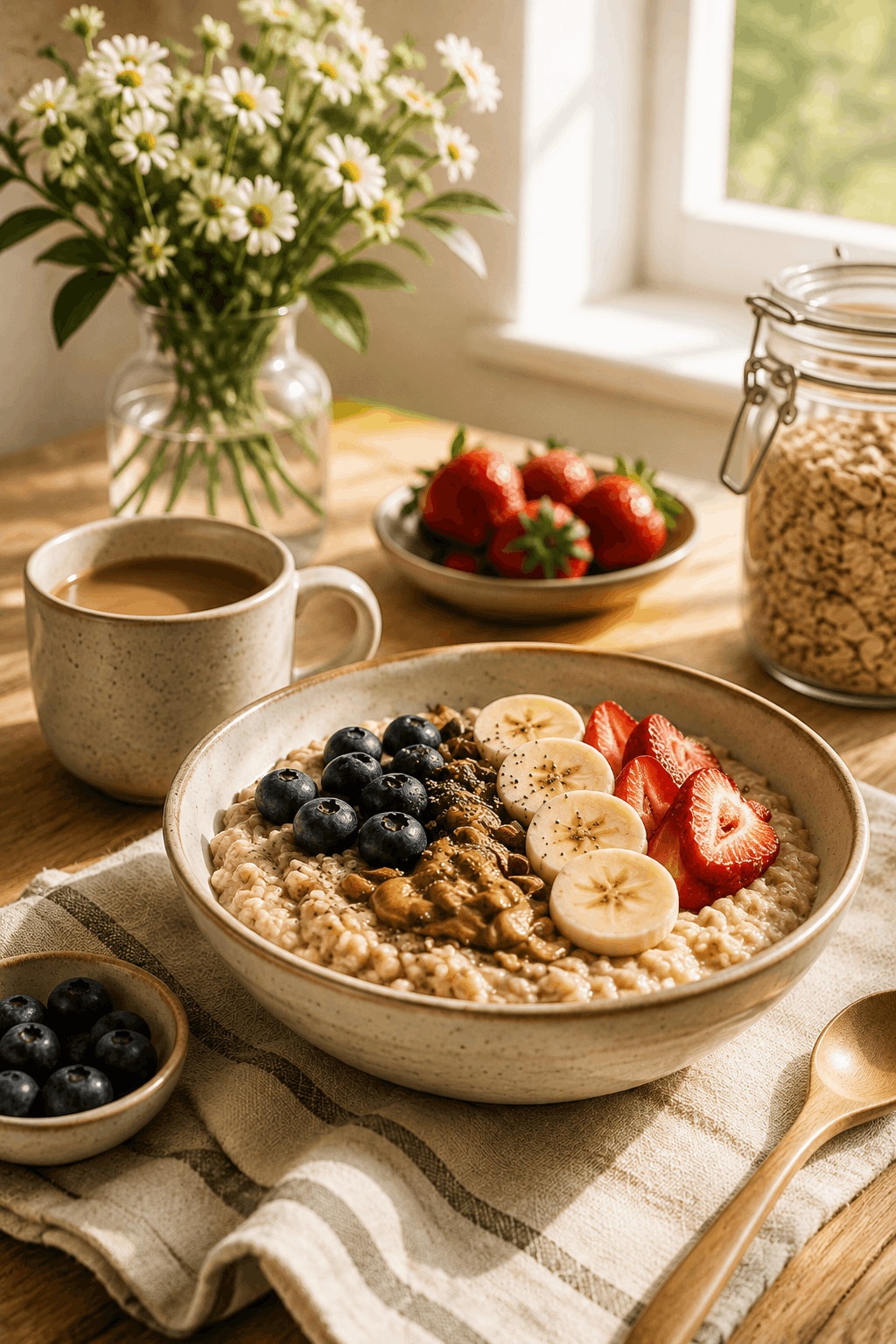
Breakfast gets a lot of conflicting advice — some of it insists it's the most important meal of the day, some of it says skip it entirely. In practice, what matters more than any rule is whether your morning meal actually keeps you steady until your next one, without requiring you to think too hard about it.
The three things worth including
A breakfast that tends to hold up well through a morning usually includes some protein, some fiber, and a source of energy your body can use steadily rather than all at once. That might be eggs with whole-grain toast and fruit, yogurt with oats and berries, or a simple smoothie built around protein, fruit, and something like oats or nut butter.
None of these need to be elaborate. The goal isn't a picture-perfect spread — it's a combination that keeps you comfortable and focused, rather than reaching for something an hour later because the first option didn't hold you over.
Why simplicity tends to win in the morning
Mornings are usually the least flexible part of the day — there's rarely time for a complicated routine before work or getting the day started. A breakfast that requires ten steps is a breakfast that gets skipped the moment things get busy. The most sustainable morning meals tend to be the ones that can be made with minimal thought, using ingredients that are already on hand.
Leaving room for what actually works for you
Some people feel best eating shortly after waking up. Others prefer to wait an hour or two. Some do fine with a smaller breakfast and a bigger midday meal; others need something more substantial to start the day. There isn't one universal formula here — the more useful question is simply whether your current breakfast routine leaves you feeling steady, or leaves you scrambling by mid-morning.
- Pair a protein source with a fiber source most mornings.
- Keep two or three go-to breakfasts in rotation so there's rarely a reason to skip.
- Adjust timing and size based on how your morning actually feels, not a fixed rule.
Building a breakfast around what you already have
You don't need special ingredients to put this into practice. Most kitchens already have something that covers each of the three categories — eggs or yogurt for protein, oats or whole-grain bread for fiber, fruit for a bit of natural sweetness and additional fiber. The goal isn't to shop for a new breakfast routine, it's to notice what's already on hand and combine it a little more deliberately.
It's also worth giving yourself permission to have the same breakfast on repeat for weeks at a time. Variety gets a lot of attention in nutrition advice, but for a meal eaten mostly on autopilot before the day gets going, familiarity is often more useful than novelty. A breakfast you don't have to think about is one you're far more likely to actually eat.
A balanced breakfast, in the end, is less a specific recipe and more a short checklist: something with staying power, something simple enough to repeat, and something that fits the way your particular morning actually unfolds.

This article provides general educational information and is not a substitute for individualized medical advice. Always consider your own circumstances, and speak with a qualified professional about decisions specific to your health.