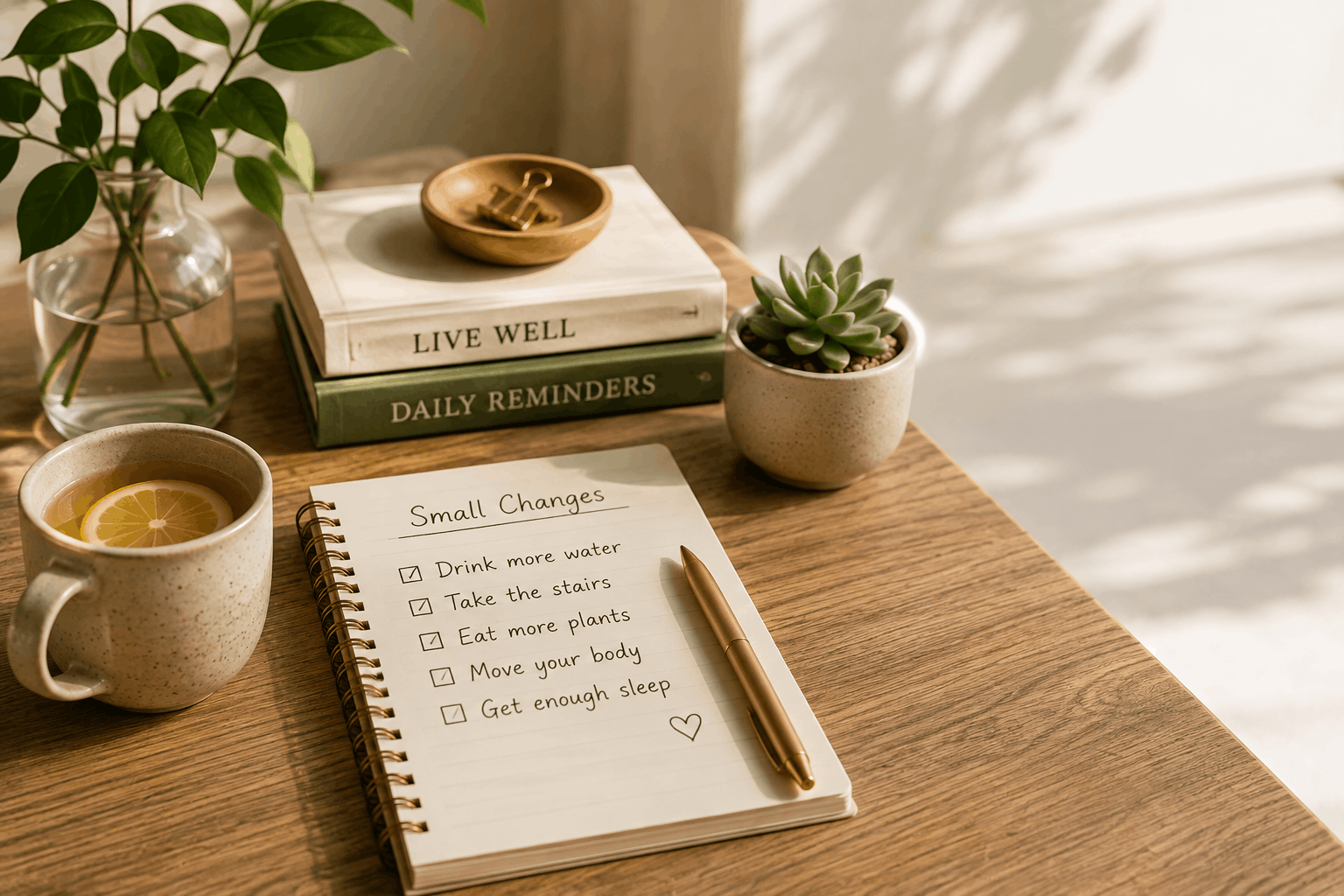
Ambitious plans are exciting to make and, more often than not, difficult to keep. There's a familiar pattern to how they tend to unfold: a burst of motivation, a complete overhaul of the way you eat, a few strong weeks — and then, gradually, a slide back to where things started. This isn't a personal failing. It's what tends to happen when a change is too large to fit into an ordinary week.
Why smaller changes tend to outlast bigger ones
A small change asks very little of you, which is exactly why it's easier to keep doing. Swapping one habit — say, adding a vegetable to dinner, or keeping fruit within easy reach — doesn't require restructuring your whole routine. It fits into the day you already have, rather than asking you to build a different day from scratch.
Because it's easier to sustain, a small change has more time to become automatic. And once something is automatic, it no longer costs willpower to maintain — it simply becomes part of how you already do things, the same way brushing your teeth doesn't require daily motivation.
Layering habits instead of replacing everything at once
One useful way to think about long-term change is as a series of layers rather than a single transformation. The first small habit — maybe drinking a glass of water before breakfast — doesn't need to solve everything on its own. Once it's steady and unremarkable, it becomes a stable base that a second small habit can be added onto, and then a third.
This is slower than an all-at-once overhaul, and that's precisely its advantage. Each layer has already had time to settle before the next one is introduced, so the whole structure doesn't collapse the moment one part gets difficult.
What this looks like over a longer stretch of time
Six months from now, the specific small habit you started with might feel almost invisible — not because it stopped mattering, but because it's simply part of how you already live. That's the actual marker of success here: not a dramatic before-and-after, but a version of your routine that quietly includes more of what supports you, without requiring constant effort to maintain.
- Choose one small, specific change rather than several at once.
- Give it time to feel automatic before adding another.
- Judge progress by what's become routine, not by how dramatic it feels.
Starting smaller than feels necessary
A common mistake is choosing a starting habit that's still too ambitious — one that technically counts as 'small' but still requires real effort every day. The most durable starting points tend to feel almost too easy, which is usually a sign they're sized correctly. It's easier to build on an easy habit than to recover from an abandoned hard one.
If a habit ever starts to feel like a burden, that's usually a sign to shrink it further rather than to push through. A habit that's been scaled down to something almost effortless can always be built back up later, once it's had time to settle in. There's no real cost to starting smaller than seems necessary — but there's a real cost to starting too big and abandoning it a few weeks in.
Big differences, in the end, are rarely built from big moves. They're built from small ones, repeated for long enough that they stop feeling like effort at all — which is exactly why they last.

This article provides general educational information and is not a substitute for individualized medical advice. Always consider your own circumstances, and speak with a qualified professional about decisions specific to your health.